What will the media, journalism and the way we access information look like in 2050? What role will artificial intelligence, media literacy and citizens play in shaping the future information landscape?
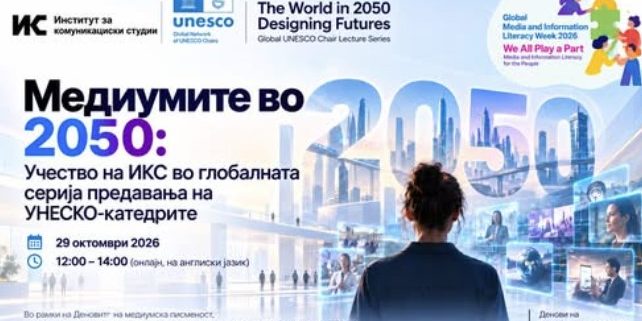
These questions were at the heart of a lecture delivered by Aleksandra Temenugova from the Institute of Communication Studies (ICS), who on 29 October took part in the fourth global lecture series of UNESCO Chairs, “The World in 2050 – Designing Futures”.
The series is organised by the UNESCO Chair at Eurac Research in Bolzano, Italy, in cooperation with the Catholic University of Eichstätt-Ingolstadt in Germany and UNESCO in Paris. It brings together 19 UNESCO Chairs from 13 countries, including ICS, which hosts the UNESCO Chair on Futures Literacy and Media and Information Literacy.
Temenugova explored the potential transformations of the media and information environment over the next two and a half decades. The lecture also addressed the impact of artificial intelligence, disinformation, trust in information and journalism, as well as the importance of media literacy and futures literacy in shaping the future we want.
Through this lecture, along with other activities, ICS joined the Media Literacy Days organised by the Agency for Audio and Audiovisual Media Services (AVMU), contributing to the discussion on the future of the media and the competencies citizens will need.