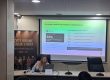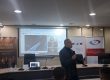
How do young people decide whether to trust a post? What makes them question its credibility, and how do emotions influence the content they follow and share? These questions were at the heart of the workshop “What Do We See, What Do We Believe? Young People and Online Content”, organised by the Institute of Communication Studies (ICS) on 28 October with first-year students from “Nikola Karev” High School in Skopje.
Through interactive activities and discussion, the students explored their digital habits and the reasons why they trust certain sources. The conversation focused on what first catches their attention in a post, what makes them believe it, and what they would check before sharing it with others. Particular attention was paid to how headlines, images and different ways of presenting the same story can influence their interpretation.
The workshop also addressed questions related to identifying manipulated content and trusting information generated by artificial intelligence. At its centre were the students’ own thoughts and dilemmas: how they react to content that entertains or worries them, why they question some information, and what they consider important to know about the online environment.
Their questions and experiences will serve as a basis for developing educational content that reflects the interests and needs of young people. The aim is to actively involve them in the development of materials that will help their peers assess digital information more critically.
The workshop was held as part of Media Literacy Days 2026, organised this year by the Media Literacy Network under the slogan “We All Have a Role to Play”.
The workshop is part of the “InfoFacto” project, supported by the European Union through the Creative Europe programme. The project involves the development of an educational platform designed to help adolescents across Europe critically assess digital content and identify disinformation, including content generated by artificial intelligence.